Season extension
Using Row Covers on Container Vegetables
A row cover can shelter a pot of spinach through unsettled fall weather, but the fabric needs daily attention. Choose it for the crop and forecast, give it a stable support, and leave yourself an easy way to check the plants underneath.
- Starting crops
- Established, cold-tolerant leafy greens
- Daily checks
- Temperature, cover security and moisture
- Main limitation
- Covered foliage does not guarantee protected roots
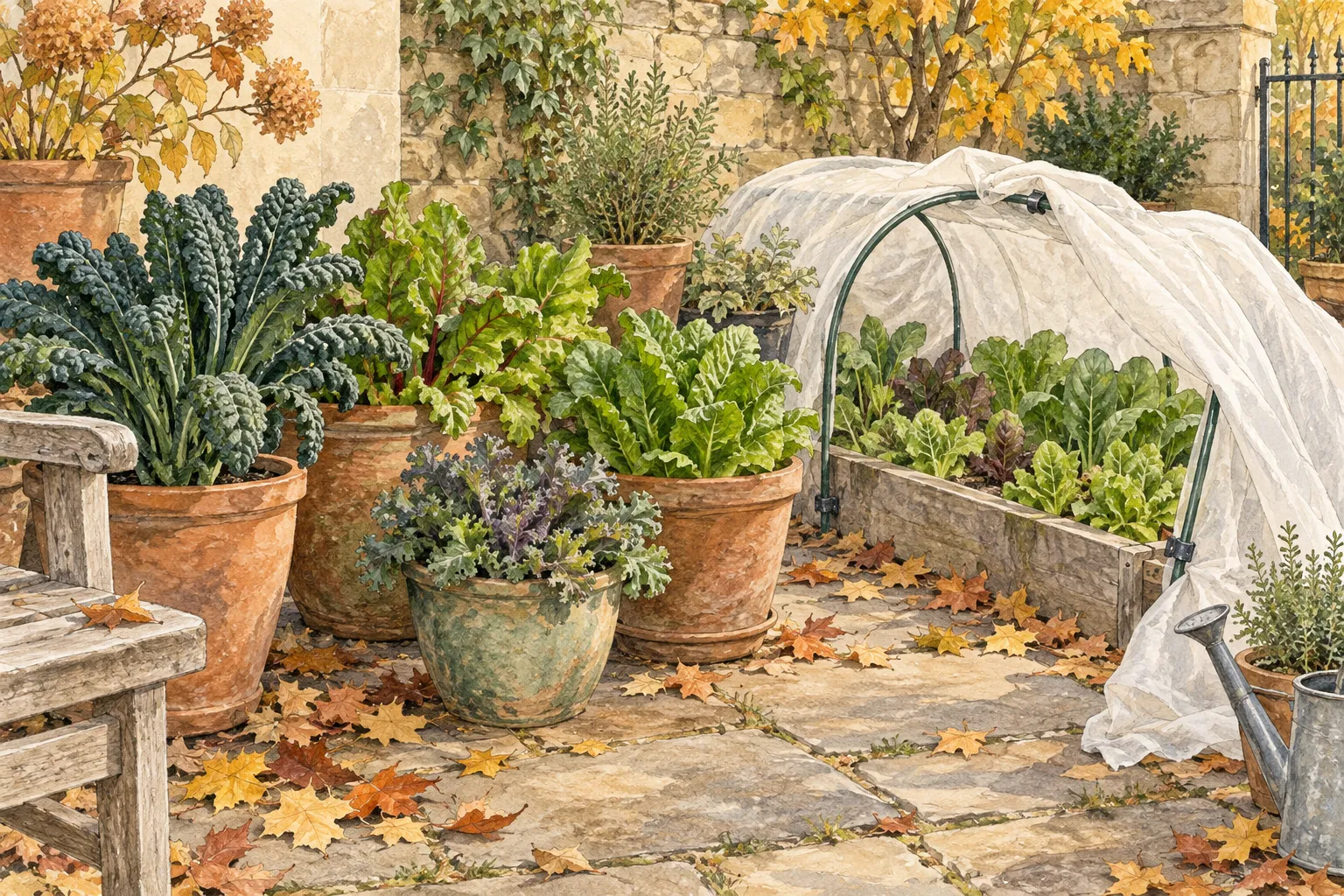
Choose fabric for the job
Look for horticultural row-cover fabric with a stated weight, light transmission, and intended use. Thin insect barriers and heavier frost fabrics serve different purposes. A product described only as garden netting may offer little useful cold protection.
Heavier fabric generally blocks more light. That tradeoff matters on a porch already shaded by an overhang. Keep heavier protection available for cold spells, then reassess whether it is needed during the day. Advertised degrees of frost protection are estimates: wind, installation, crop condition, and the length of the freeze affect the result. Clear plastic requires different ventilation management and should not be substituted casually.

Build a cover you can open easily
Use a small hoop or stable frame to keep fabric above fragile leaves. Leave enough height for growth and enough fabric to reach the surface around the container. A cover stretched tightly across the rim can press against plants as they grow.
Secure the frame and fabric so neither can lift or tip in wind. On a patio, weights belong on the supporting surface, where they cannot fall off a railing or shelf. Leave one side accessible for watering and harvest. Smooth any sharp contact points that could tear the material. After the first windy day, check for rubbing, loose edges, and sagging fabric.
Give the pot its own protection
Roots in an aboveground container have much less surrounding insulation than roots in a garden bed. A fabric tent over the leaves does not make a small pot behave like a bed of soil. Pay attention to the forecast's overnight low and how long freezing weather will last.
For cold-sensitive plants in movable pots, plan a sheltered, frost-free overnight location before a hard freeze. Outdoor pots may need insulation around their sides as well as a cover over the crop. Keep drainage openings clear. Choose containers that tolerate outdoor winter conditions; some absorbent pots can crack during freezing and thawing.
Open the cover when heat builds
Check beneath the cover on bright days, even when the outdoor air feels cool. A thermometer at plant height helps you see what the leaves experience. Compare that reading with the conditions suitable for your crop; spinach and other cool-season greens do not benefit from being kept hot.
Lift a side, open the ends of a small tunnel, or remove the fabric when warmth builds. Recheck after opening, and secure it again before the next cold night if protection is needed. If you cannot check during the day, avoid leaving a tightly enclosed setup through a forecast warm spell.
- Cold night ahead: secure suitable protection before temperatures fall.
- Bright or warming day: check beneath the cover and open it when heat builds.
- After wind or snow: inspect the support, fabric and access to the pot.
- Before watering or harvesting: lift the cover and check the plant and mix directly.
Check moisture and inspect the leaves
Row-cover fabric admits water, but rain is no guarantee that a covered pot received enough. Lift the edge and feel the potting mix beneath the surface. Water when needed and let excess water drain; a slower-growing winter crop may use less water than it did in summer.
While the cover is open, look at leaf undersides and new growth. Insects already on a plant can remain trapped beneath the fabric. Remove accumulated debris and check for tears. If wet fabric freezes onto foliage, avoid pulling it away while it is stuck; supports help reduce that contact.
Plan for slower harvests
Start with greens that have already made useful growth before winter. Protection can help preserve an existing crop while new leaves develop slowly. It cannot replace light or make a late sowing catch up on demand.
Watch the actual sunlight reaching your pots as the sun sits lower. Hours of direct sun on a balcony differ from the total length of the day. Move pots to a brighter suitable position when practical, and remove unnecessary layers of fabric. After snow, inspect the support before weight pushes the cover onto the plants. Harvest thawed leaves gently, leaving enough healthy growth for the crop's normal harvest method.
Sources & further reading
University and public-agency guidance used to check this article. Follow local recommendations when conditions differ.
- University of Maryland Extension: Vegetable Garden Weather and Pest Protection ↗
- University of Minnesota Extension: Extending the growing season ↗
- Oregon State University Extension: Winter vegetable production west of the Cascades ↗
- Oregon State University Extension: Container Planting ↗
- University of Maryland Extension: Growing Vegetables in Containers and Salad Tables ↗
Sources checked October 8, 2026. This guide is a research-based explanation, not a report of a Porchleaf growing trial. Our editorial approach.