Herbs
How to Grow and Harvest Chives in a Pot
A pot of chives can be useful when you usually need a small amount for a meal. Start with a labeled plant, leave room for the clump to grow, and decide how you will manage it beyond the first season.
- Start
- One labeled common-chive clump
- First harvest guide
- Leaves about 6 inches tall
- Cut height
- About 1–2 inches above the mix
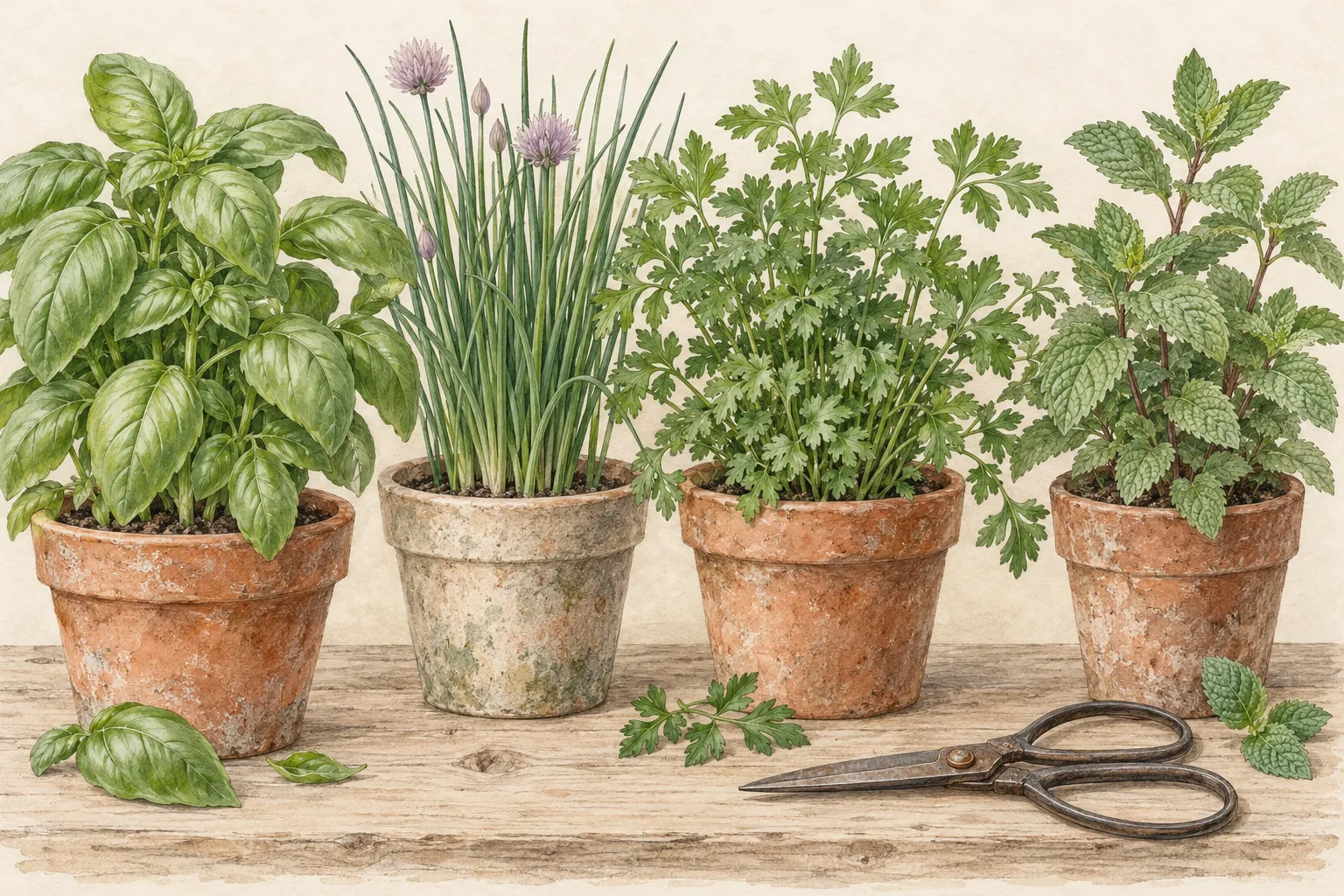
Begin with one common-chive clump
Common chives are Allium schoenoprasum. Buy a labeled culinary plant or use a healthy division; garlic chives are a different plant. A nursery clump gives a quicker kitchen start than seed.
Choose a draining pot that accommodates the root ball and leaves access around the base for scissors. Fill with container mix, set the clump at its existing growing level and water it in. Keep the clump in its own pot so that later division is straightforward.
For a seed start indoors, Virginia Cooperative Extension describes a 6-inch pot. A small seed-starting arrangement is not a permanent size limit for a mature clump: check root space and repot or divide as it fills.

Put usable light ahead of kitchen convenience
An outdoor sunny position or a well-lit indoor position supports regrowth. Do not hide the pot behind taller herbs simply because it fits there. In winter, inspect the newest growth and review the indoor-herb guide if the window does not provide enough light.
Check the mix and water the root area when needed, allowing surplus water to drain. A clump growing slowly indoors will not necessarily use water at its outdoor summer rate. Follow container-product directions rather than a bed fertilizer dose.
Cut above the base
Maryland Extension suggests beginning when leaves reach about 6 inches tall. Cut with scissors about 1–2 inches above the mix, rather than pulling leaves out of the clump.
For a small harvest, cut a section and leave the rest growing. Wait for useful regrowth before cutting that section again. A recently divided or struggling clump needs time to establish rather than a fixed weekly harvest.
Divide a crowded clump when growth resumes
If the clump has filled its space, prepare destination pots before lifting it. Separate healthy rooted sections, keep roots from drying and replant at their previous level. Unexplained decline needs investigation before it is blamed on crowding.
Maryland recommends assessing division in spring at roughly three-year intervals. Use that as a prompt to check the clump, not a deadline for every pot. After division, allow establishment and new growth before resuming harvest. Exposed winter pots also need protection suited to local conditions.
Sources & further reading
University and public-agency guidance used to check this article. Follow local recommendations when conditions differ.
- University of Maryland Extension: Chives ↗
- Utah State University Extension: How to Grow Chives in Your Garden ↗
- Virginia Cooperative Extension: Vegetable Gardening in Containers ↗
Sources checked October 10, 2026. This guide is a research-based explanation, not a report of a Porchleaf growing trial. Our editorial approach.