Indoor herbs
How to Grow Herbs Indoors in Winter
A winter herb garden starts with the light available at the leaves. Before buying a collection of kitchen herbs, choose a place for one or two pots and check whether it receives direct sun. A bright-looking kitchen is not always a good growing space.
- Start small
- One or two herbs you use in cooking
- Main constraint
- Enough light for useful growth
- Watering
- Check each pot rather than follow a weekly schedule
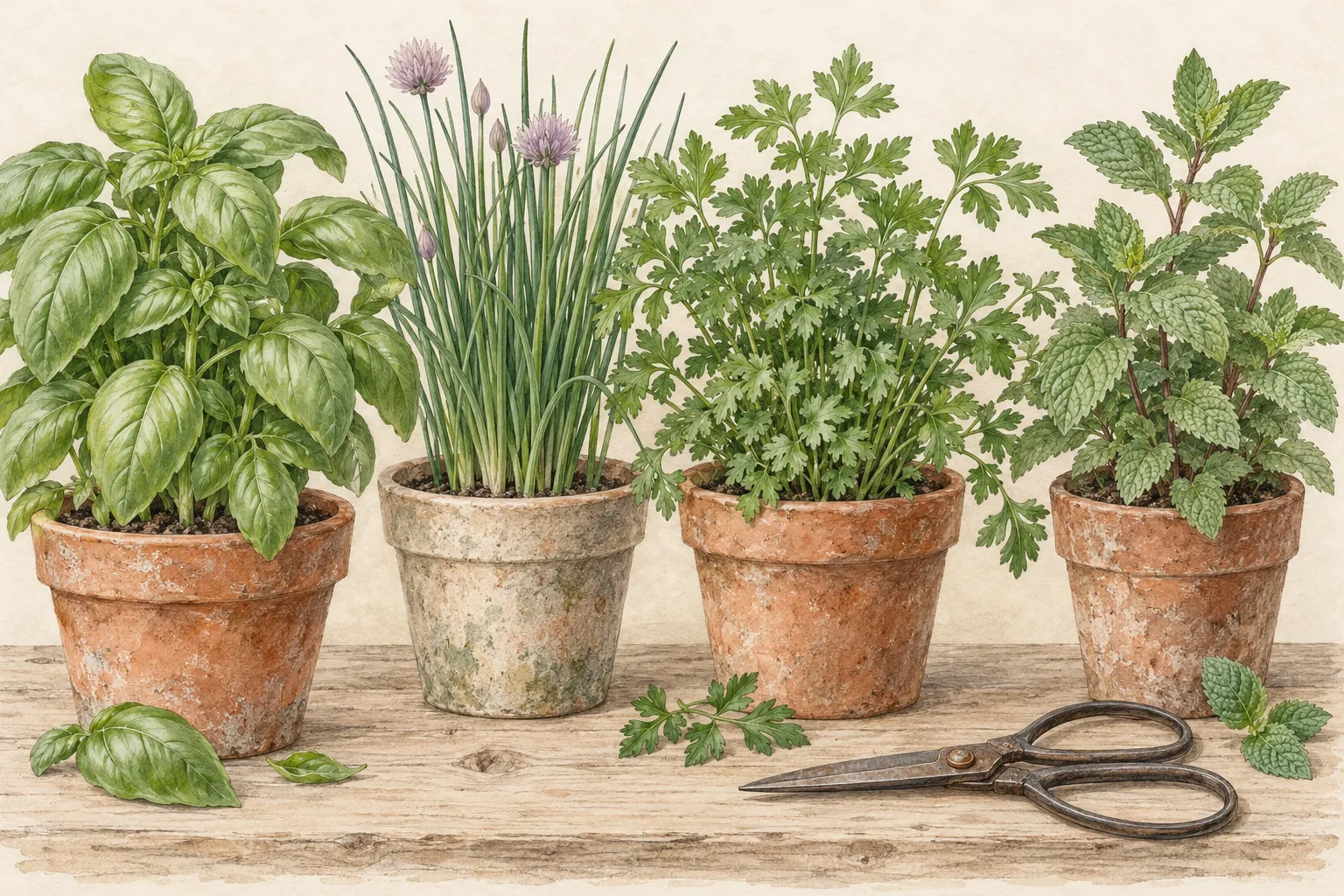
Which herbs can grow indoors?
Iowa State lists parsley, mint and chives among herbs that tolerate somewhat less light. Rosemary and thyme may need supplemental lighting. That does not make any of them a crop for a dark room. Choose for both the growing position and what you actually cook.
Begin with two separate pots rather than a large mixed planter. Label the plants and leave room to reach each pot for watering. If you are choosing between an attractive mixed arrangement and individual plants, think about how you will remove or replace one struggling herb.
Basil is another option, but assess your lighting before making it the main winter crop. Use the basil guide for its specific care rather than assuming every herb wants identical treatment.

Can a windowsill provide enough light?
Iowa State recommends a position with four to six hours of direct sunlight for indoor herbs, with differences between species. Observe the actual shelf or sill: neighboring buildings, curtains and the window frame can shade the leaves even when sunlight enters the room.
On a day when you are home, record when direct sun reaches and leaves the intended pot position. Repeat the check as the season changes. Use this observation to decide where to put the plants; it is not a measurement of the total light they receive.
If the only available position stays dim, plan for a grow light or postpone the planting. Moving a pot to a dining table for display is different from choosing its everyday growing position.
Set up a grow light without guessing the distance
Iowa State suggests a timer providing 12–16 hours of grow-light use daily. Follow the fixture manufacturer’s guidance for mounting height and coverage. A distance given for a fluorescent tube should not be copied automatically to a different LED fixture.
Make a small setup you can adjust: a stable shelf, accessible timer and enough space to raise the light as the plants grow. Keep the watering route clear of electrical equipment. Check that the leaves at the edges of the arrangement receive light too.
Long, weak new growth can be a sign that more light is needed. Review the location and lighting before adding fertilizer in response. Compare new growth over time; older stretched stems do not become compact when you move the plant.
How often should indoor herbs be watered?
University of Minnesota recommends checking about half an inch below the surface for indoor herbs and watering when that layer is dry. Use that as an observation point, not an instruction to water every pot on the same day. Persistent wetness is a reason to check drainage and growing conditions.
Use containers with drainage holes and a potting mix suited to containers. After watering, let excess water drain before returning a pot to a decorative outer container. Do not let the outer container become an unnoticed water reservoir.
Keep a short note for each pot: date checked, whether the mix was moist, and whether water was added. For example, “Monday: parsley still moist; thyme watered” is more useful than a reminder that says “water all herbs Mondays.” This is a recordkeeping example, not a prescribed interval.
Harvest according to the growth you have
Take small amounts as usable growth becomes available, rather than stripping a plant to meet a recipe. Minnesota describes harvesting herbs by snipping leaves and stems as needed. If a plant is barely replacing what you cut, reduce harvesting while you reassess the light and care.
Decide what success means before adding more pots. A few sprigs for a meal and a continuous supply for large batches of pesto require very different amounts of growth. Record the herb you use most, then expand that planting if your setup supports it.
Avoid using extra fertilizer to compensate for a poor location. Herbs need relatively light feeding; follow a product labeled for edible container plants and account for fertilizer already in the growing mix. The container-feeding guide explains how to read the product instructions.
Sources & further reading
University and public-agency guidance used to check this article. Follow local recommendations when conditions differ.
- Iowa State Extension: Can I grow herbs indoors over the winter? ↗
- University of Minnesota Extension: Growing herbs in home gardens ↗
Sources checked October 8, 2026. This guide is a research-based explanation, not a report of a Porchleaf growing trial. Our editorial approach.