Leafy greens
Kale in Containers: Baby Leaves or a Full-Size Plant?
A tray grown for young kale leaves and a pot holding a mature kale plant are different projects. Choose one before sowing: it changes how you thin, where the container stands and how you harvest.
- First mature planting
- One plant in a 5-gallon pot
- Seed depth
- About 1/4–1/2 inch; check variety packet
- Harvest
- Older outer leaves; retain the center
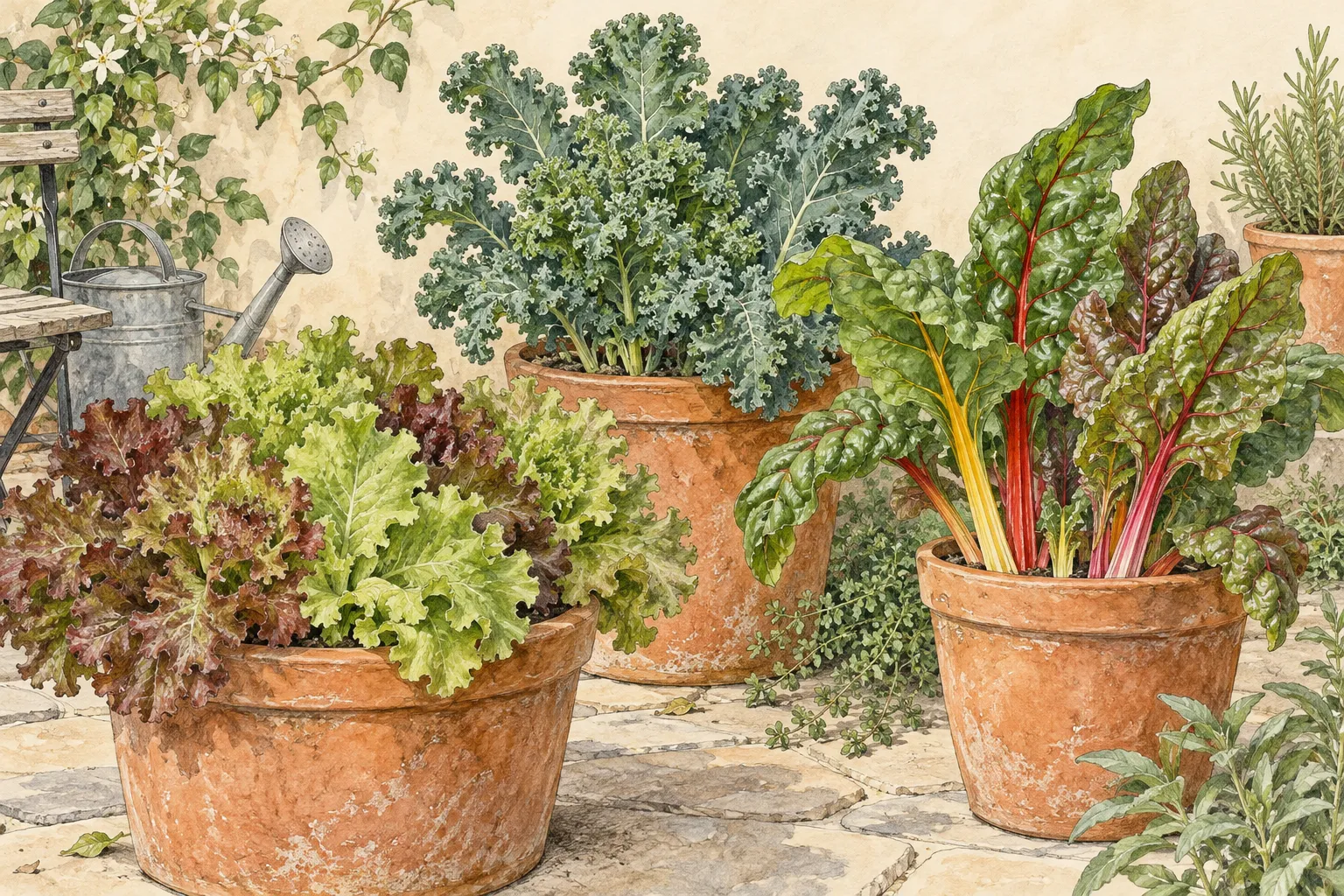
Set up for one mature plant or an early leaf crop
For a first mature kale plant, choose a 5-gallon container, the minimum listed in Virginia Cooperative Extension’s container guide. Start with one plant rather than filling the pot with nursery seedlings. Leave space around the container for spreading leaves and inspection.
Container recommendations vary with the harvest system: NC State lists a smaller minimum, while Virginia uses wider spacing. This plan favors one full-size plant. A baby-leaf sowing is a separate crop that must be cut or thinned before crowded seedlings become mature plants.

Plant during a local cool-season window
Use container mix and clear drainage openings. Utah State gives a sowing depth of about 1/4–1/2 inch; follow the variety packet if more specific. For a transplant, prepare the pot first and set the root ball at its previous growing level.
Choose spring or fall timing from local Extension guidance. Check moisture around a new root ball or seedbed rather than using the interval for a large established plant. Kale is cool-season, but a month from another state is not a planting instruction.
Harvest older leaves and inspect the undersides
Cut usable older outer leaves, retaining the center and healthy younger growth. Take a small amount from a small plant; wait if the next cut would leave it nearly bare. Wash harvested leaves before eating.
Inspect leaf undersides while harvesting. Aphids and caterpillars are possible pests, but holes do not identify an organism. Photograph or identify what is present before choosing a treatment, and use local advice for edible crops.
Make a decision before prolonged cold
Root exposure in an aboveground pot differs from insulation in garden soil. Use the forecast and local container advice to decide whether to harvest, protect or clear the plant. In-ground cold tolerance does not guarantee survival in this pot.
A cover needs access for moisture checks and ventilation. An established plant may retain harvestable leaves while producing little new growth; do not treat winter survival as an unlimited fresh harvest.
Sources & further reading
University and public-agency guidance used to check this article. Follow local recommendations when conditions differ.
- Utah State University Extension: How to Grow Kale in Your Garden ↗
- University of Maryland Extension: Growing Leafy Greens in a Home Garden ↗
- Virginia Cooperative Extension: Vegetable Gardening in Containers ↗
- NC State Extension: Plants Grown in Containers, Table 18–1 ↗
Sources checked October 10, 2026. This guide is a research-based explanation, not a report of a Porchleaf growing trial. Our editorial approach.