Leafy greens
Swiss Chard in Pots: Room for Leaves and Stalks
Before planting Swiss chard, decide what you will cook with it. Small leaves and substantial stalks are different harvests, and a planter kept for tender leaves needs a different space plan from one holding mature plants.
- First mature planting
- One plant; at least 2 gallons
- Container depth
- At least 8 inches of usable depth
- Harvest
- Outer leaves and stalks; retain center
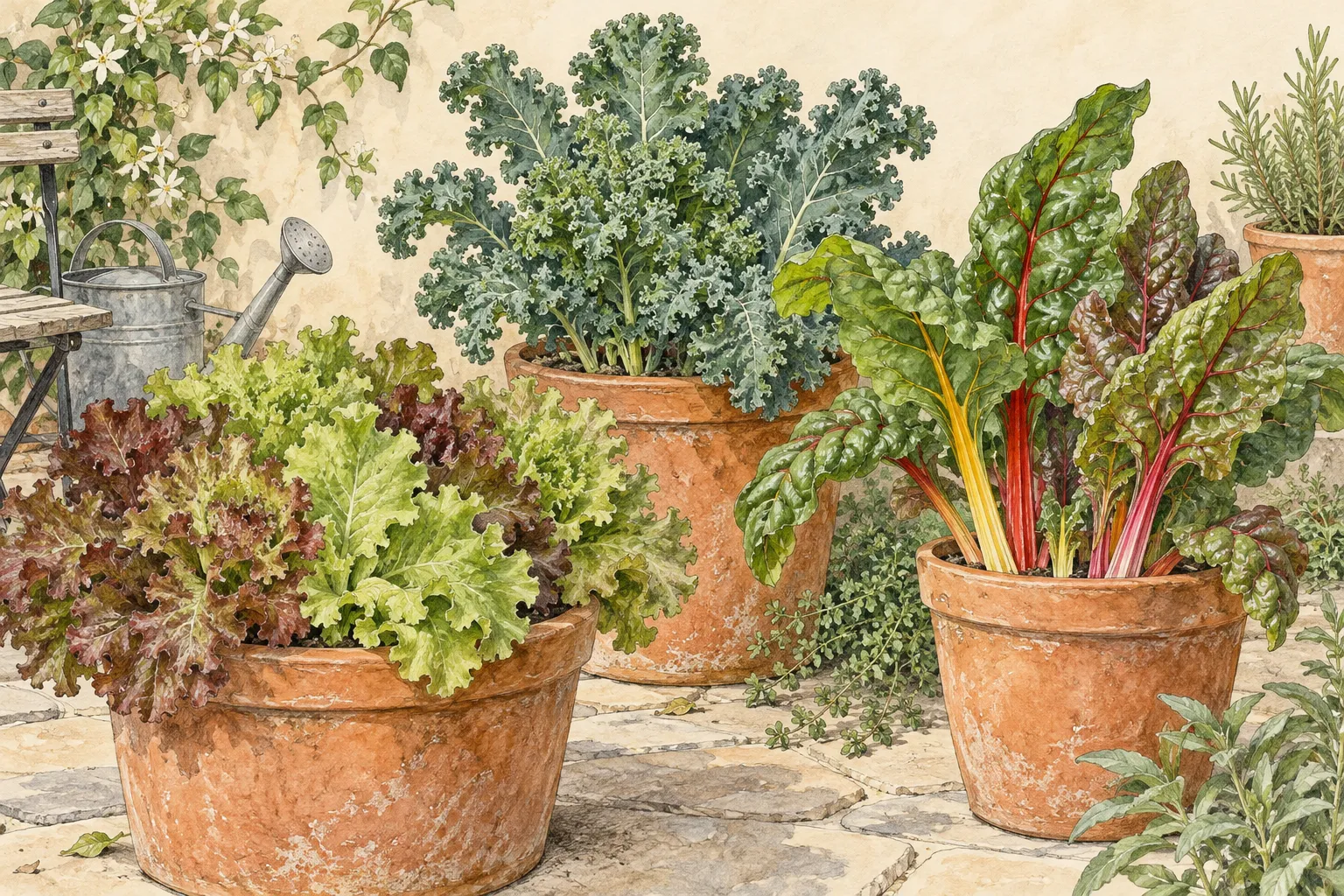
Choose a container for the plant you intend to keep
Maryland Extension lists 2 gallons as a minimum container volume for Swiss chard. For a first planting, use one plant in a draining pot of at least that volume rather than crowding several nursery transplants together.
NC State’s container table gives an 8-inch minimum depth for chard. Check the usable fill depth as well as the volume. Use potting mix and leave room around the plant to reach the bases of its leaves.

Sow and thin the clusters
Utah State gives about 1/2 inch as the sowing depth. Check the packet and keep the seedbed moist during emergence. Many chard seed balls contain multiple embryos, so one sowing point can produce several seedlings; monogerm varieties are an exception.
Thin to the final planting you planned instead of keeping every seedling. A nursery cell may contain a cluster too. For a single mature plant, retain a healthy seedling rather than allowing the nursery arrangement to determine permanent crowding.
Cut outer leaves, keeping the young center
Take usable older leaves with their stalks and leave the central growth intact. Clean scissors help you cut the chosen stalk without tearing neighboring leaves. Harvest smaller tender leaves or larger cooking leaves according to the meal, while leaving healthy foliage.
Check mix moisture regularly and water the root area when needed. If growth is weak, inspect crowding, dryness and drainage before adding fertilizer. Account for nutrients already in the growing mix.
Know when the season is ending
Maryland describes tolerance of light frost rather than heavy freezing. Check the forecast before deciding to retain an exposed pot. A few cool nights do not establish that the container can remain outside throughout winter.
Harvest usable leaves before the protection you can provide becomes inadequate. If you cover the plant, keep it accessible for watering and daytime checks; a cover cannot guarantee survival of exposed roots.
Sources & further reading
University and public-agency guidance used to check this article. Follow local recommendations when conditions differ.
- Utah State University Extension: How to Grow Swiss Chard in Your Garden ↗
- University of Maryland Extension: Growing Swiss Chard in a Home Garden ↗
- University of Maryland Extension: Growing Vegetables in Containers and Salad Tables ↗
- NC State Extension: Plants Grown in Containers, Table 18–1 ↗
Sources checked October 10, 2026. This guide is a research-based explanation, not a report of a Porchleaf growing trial. Our editorial approach.