Winter watering · Coastal California
Water Bay Area containers through winter rain and dry spells
Compare the mix in a rain-exposed Bay Area pot with one beneath an eave. One may remain wet while the other needs water; a single winter schedule can miss both conditions.
- Compare
- Rain-exposed and sheltered pots
- Water when
- Root-zone moisture and crop need justify it
- Timer
- Review settings and emitter placement
Separate rain exposure
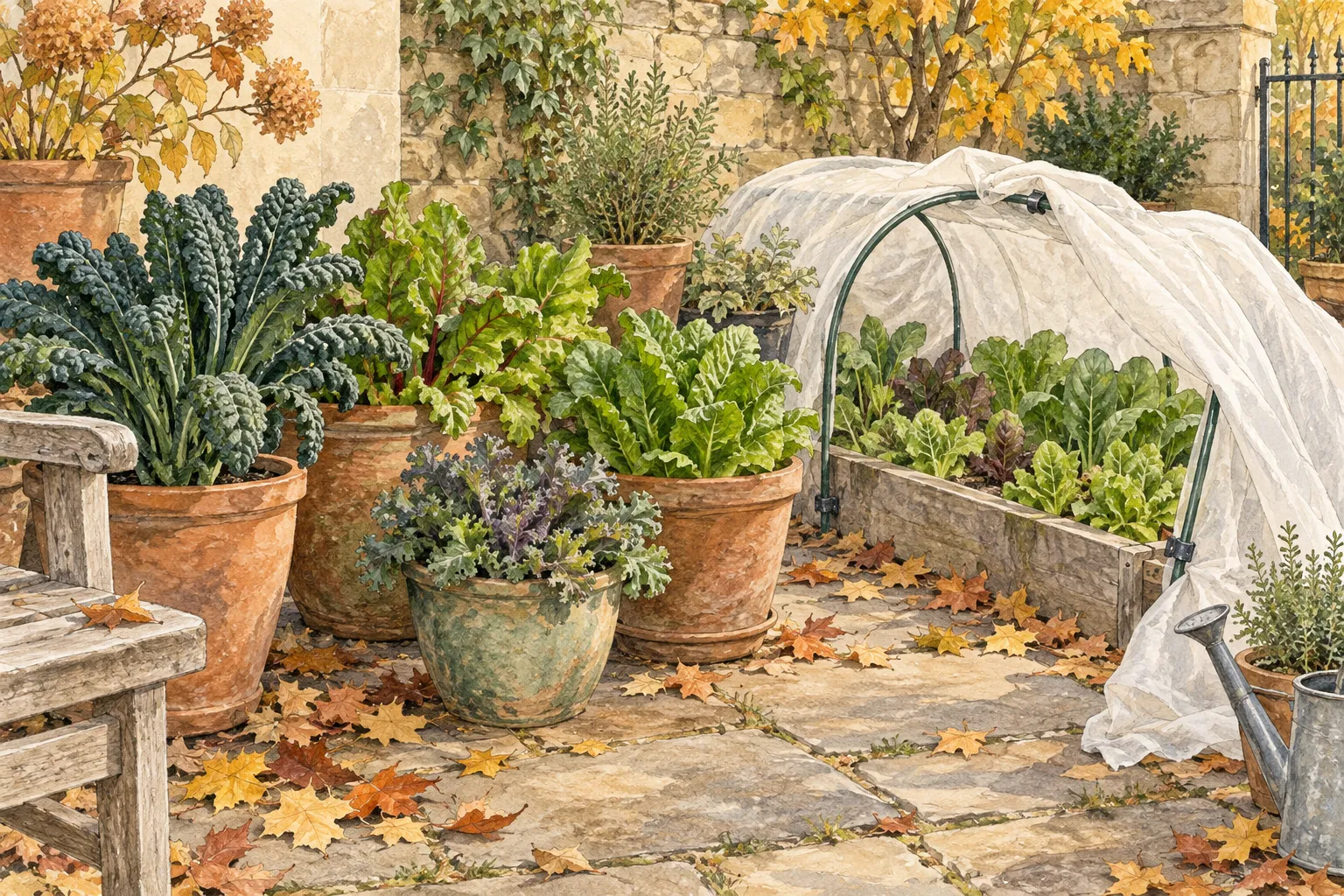
Identify covered balconies, eaves and walls that block rain. Check those pots separately from exposed ones. Wet paving does not show what reached the planting.
UC Contra Costa guidance notes that pots beyond rainfall still need irrigation as required. Use the exposure principle rather than turning its local weather into a Bay Area-wide schedule.

Check below the surface
Feel moisture below the surface where practical, accounting for pot size and root zone. UC’s container material recommends checking a few inches down. Surface color alone is insufficient.
If mix remains wet, check drainage before adding water. If the root zone needs irrigation, apply it carefully and confirm excess escapes. Seedlings also need attention to their shallow establishment zone.
A two-pot example
After rain, the pot under an overhang may be dry below the surface while the exposed pot stays moist. Irrigate the dry planting according to crop need and leave the moist one without extra water. This is an exposure example, not an interval recommendation.
If both are wet, neither needs topping up. Empty trapped runoff and inspect outlets where a container stands in water.
Review automatic irrigation
Do not carry a summer setting into winter unchanged or stop every pot for the entire season. Adjust from moisture, crop needs and rain exposure.
After moving containers, check that emitters still deliver into the mix. A running system can miss the pot. Sheltered and exposed plants may require different management.
Dry spells and cold
Keep checking rather than waiting for a fixed number of rain-free days. Moving under shelter changes rain and possibly light; reassess location as well as watering.
Mild coastal coverage does not mean every patio is frost-free. Follow cold forecasts and retain free drainage during storms and irrigation.
Sources & further reading
University and public-agency guidance used to check this article. Follow local recommendations when conditions differ.
- UC Master Gardeners, Contra Costa: Growing winter vegetables on patios ↗
- UC Master Gardeners: Container vegetable gardening ↗
- Oregon State Extension: Watering basics ↗
This guide is a research-based explanation, not a report of a Porchleaf growing trial. Our editorial approach.